Home
Blog
Benefits
Virgin
Diet
Skin
Hair
Organic
Thyroid
Weight
Recipes
Buy
Coconut
Cures A-M
Cures N-Z
Myths
Testimonials
Newsletter
Site Map
Health Links
About
Contact Me

XML RSS
What is this?
Add to My Yahoo!
Add to My MSN
Add to Google


Extra Virgin Coconut Oil:
The Best Coconut Oil There Is?


Extra virgin coconut oil does not officially exist, yet. There is no such thing as extra virgin coconut oil, technically. The term extra is added to imitate the olive oil industry for marketing purposes.

Virgin coconut oil or VCO is produced from processing fresh coconut meat, coconut milk and/or coconut milk residue. The following are some of the processes used here in the Philippines, the world's largest exporter of coconut products:

  • Fresh - Dry Process (Desiccated Coconut Route)
  • Traditional Wet or Modified Kitchen Process
  • Centrifuge Process
  • Bawalan - Masa Process

A Little History

The number of beauty care products in Manila mushroomed in the late 1990s. Together with the growing presence of massage oils and aromatherapy, the demand for high quality coconut oil (CNO) exploded.

It didn't take long before both the manufacturers and end users coined the term virgin coconut oil. Up to this very day though, the industry has not identified, yet, any set of quality standards that will formally classify certain coconut oils as virgin.

Extra virgin coconut oil does not exist because there are no clear guidelines yet on what makes CNO virgin in the first place, let alone extra virgin. The Philippine Coconut Authority or PCA should lead the way in coming up with such internationally accepted benchmarks.

Virgin Coconut Oil

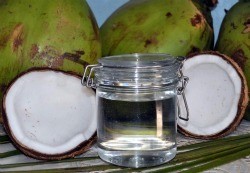
Extra Virgin Coconut OilVirgin coconut oil can be defined as the naturally processed, chemical-free and additive-free product from fresh coconut meat or its derivative (coconut milk and coconut milk residue). It has not undergone any added chemical processing after extraction. It has a fresh coconut aroma or scent ranging from mild to intense depending on the process used.

Furthermore, it is the purest form of coconut oil. Water white in color, it has natural antioxidant properties that allows it to stay fresh for a very long time. Atmospheric and hydrolytic oxidation is non-existent resulting to very low free fatty acid content and low peroxide value. These characteristics remind me of the type of coconut oil my wife makes in our very own kitchen.

Whichever process you choose in making VCO, make sure you select fully matured nuts. To be certain the nut is thoroughly seasoned, the shell should be dark brown in color among other things. You must use premium grade coconuts or you might end up refining it anyway because of the impurities and contaminants.

Are there Other Types?

There are basically two main types of coconut oil, Virgin and RBD (Refined, Bleached and Deodorized). Others are really just sub-types or sub-sub-types of the above. RBD oil is typically derived from copra which is the dried meat or kernel of the coconut fruit.

Interestingly, both virgin and RBD oils contain essentially the same amounts of medium-chain fatty acids (MCFA). MCFAs have impressive antimicrobial properties that can protect you from a variety of deadly diseases. MCFAs are also what put coconut oil head and shoulders above all other dietary oils and fats.

Keep in mind though that unlike VCO, RBD oil no longer possesses natural antioxidant characteristics. They were wiped out by the refining, bleaching and deodorizing process necessary to sterilize it from bacteria and mold.

You frequently can't tell the difference between VCO and RBD oil just by looking. RBD oil can be just as clear as virgin coconut oil. The way to differentiate is by smelling and tasting. RBD oil is basically tasteless while VCO has a mild to intense, fresh coconut scent AND flavor.

Without strict measures, it is impossible to categorize different makes or grades of CNO. That being said, saying extra virgin coconut oil may not be all-hype after all.

It's Completely Your Choice

I've tried at least a dozen different brands of virgin coconut oil made here in the Philippines. A couple smelled and tasted awful. While some of the rest are without a doubt more delicious and aromatic than others, there isn't much of a difference in overall effectiveness. And for me, that's what matters most.

That is why it's crucial that you find a brand that your nose and taste buds will agree with. Some like the mild smell and/or taste while others prefer it strong. It's up to you. Remember that coconut oil is a food or what we call, functional food. If you like the food, you will surely eat it, right.

Some are labeled extra virgin, some are not. But to me, they've all proven their healing worth. Ever since I started using VCO in December of 2006, I've enjoyed restful sleeps because I never had to suffer from thigh and leg muscle pain at night AGAIN.

Insider Info

Keep this tip in mind when purchasing high grade coconut oil. Read the label and see if it says ANH or Absolutely No Heat. You know what, call the manufacturer to be safe. This is the best coconut oil in my opinion. The natural sweet fresh coconut aroma and flavor is just, oh so heavenly. Sometimes during the day, I open a bottle just for the aroma.

Although extra virgin coconut oil is really nothing more than a marketing ploy to date, I think it's still prudent on your part to take a close second look. Adding the term extra seems to mean that a good-enough effort has been made to give you totally unrefined or extra virgin coconut oil.

Just don't take their word for it. Using the tips mentioned above should keep you in good stead.


Return from Extra Virgin Coconut Oil to Virgin Coconut Oil

Return to Home Page


footer for Extra Virgin Coconut Oil page